
-
 English
- English
- French
- German
- Portuguese
- Spanish
- Russian
- Japanese
- Chinese
- Korean
- Arabic
- Irish
- Greek
- Turkish
- Italian
- Danish
- Romanian
- Indonesian
- Czech
- Afrikaans
- Swedish
- Polish
- Basque
- Catalan
- Esperanto
- Hindi
- Lao
- Albanian
- Amharic
- Armenian
- Azerbaijani
- Belarusian
- Bengali
- Bosnian
- Bulgarian
- Cebuano
- Chichewa
- Corsican
- Croatian
- Dutch
- Estonian
- Filipino
- Finnish
- Frisian
- Galician
- Georgian
- Gujarati
- Haiti
- Hausa
- Hawaiian
- Hebrew
- Vietnam
- Hungarian
- Icelandic
- Igbo
- Javanese
- Kannada
- Kazakh
- Khmer
- Kurdish
- Kyrgyz
- Latin
- Latvian
- Lithuanian
- Luxembou..
- Macedonian
- Malagasy
- Malay
- Malayalam
- Maltese
- Maori
- Marathi
- Mongolian
- Burmese
- Nepali
- Norwegian
- Pashto
- Persian
- Punjabi
- Serbian
- Sesotho
- Sinhala
- Slovak
- Slovenian
- Somali
- Samoan
- Scots Gaelic
- Shona
- Sindhi
- Sundanese
- Swahili
- Tajik
- Tamil
- Telugu
- Thai
- Ukrainian
- Urdu
- Uzbek
- Vietnamese
- Welsh
- Xhosa
- Yiddish
- Yoruba
- Zulu
More Language

Search
Triclabendazole+Ivermectin Oral Suspension 12%+0.2%
Time:2026-05-21 Click:213
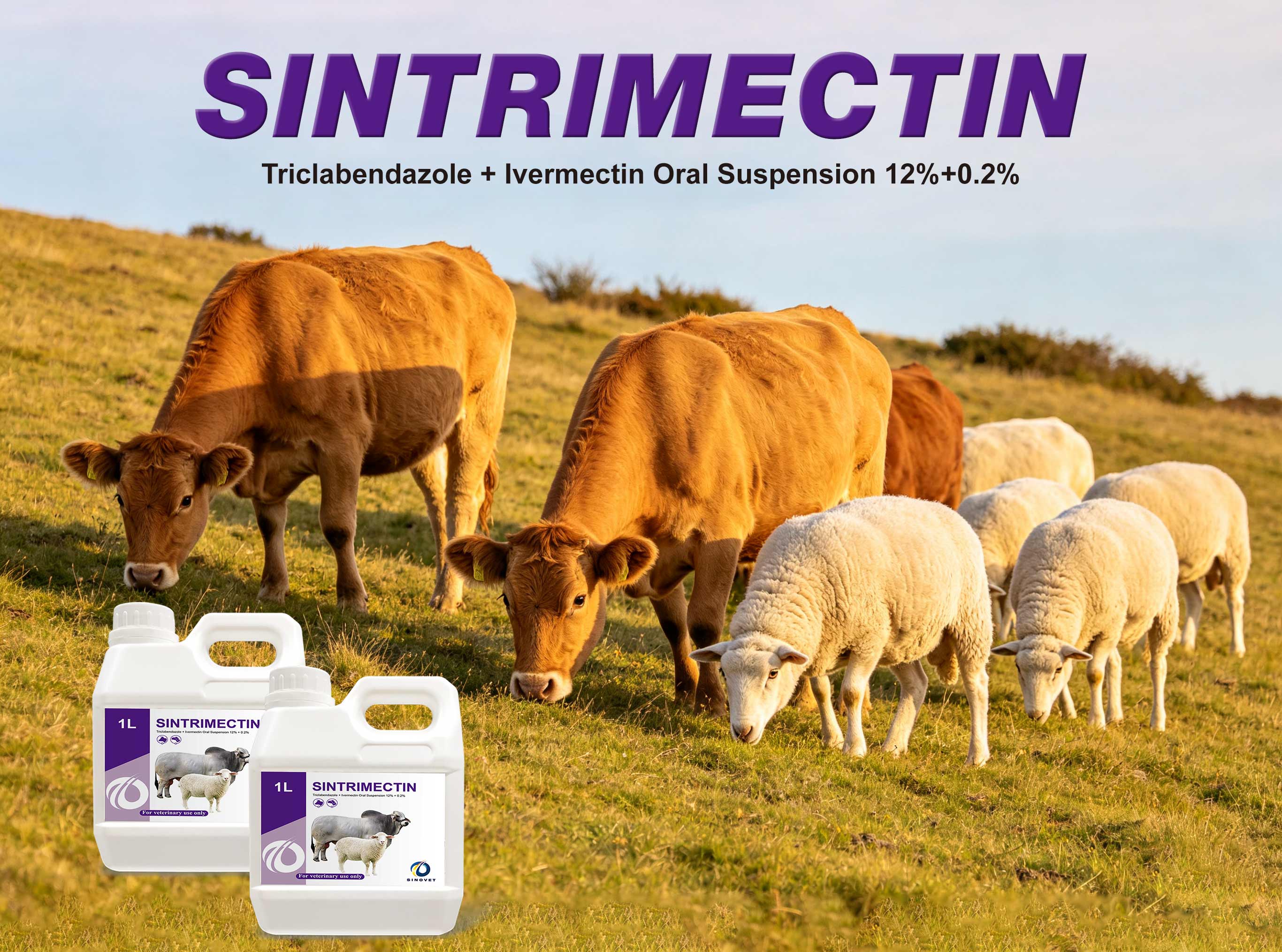
Cattle and sheep are vital components of the agricultural economy, providing essential resources such as meat, milk, and wool. However, these livestock are often susceptible to various parasitic infections, including trematodes (flukes) and nematodes (roundworms), as well as arthropod infestations. The treatment of these mixed infections is crucial for maintaining the health and productivity of these animals.
One of the most effective solutions for addressing these parasitic challenges is the use of Triclabendazole + Ivermectin Oral Suspension, which combines a potent flukicide with a broad-spectrum antiparasitic agent. Triclabendazole is specifically designed to target liver flukes, which can cause significant liver damage and reduce overall productivity in cattle and sheep. By effectively eliminating these trematodes, farmers can ensure better health outcomes for their livestock.
On the other hand, Ivermectin is renowned for its efficacy against a wide range of gastrointestinal roundworms, lungworms, and even external parasites like nasal bots. This dual-action formulation not only simplifies the treatment regimen but also enhances the overall effectiveness of parasite control in livestock.
Administering Triclabendazole + Ivermectin Oral Suspension (12% + 0.2%) is straightforward, making it an ideal choice for farmers looking to streamline their parasite management strategies. The oral suspension allows for easy dosing, ensuring that animals receive the correct amount of medication for optimal results.
In conclusion, the combination of Triclabendazole and Ivermectin in a single oral suspension offers a comprehensive solution for treating mixed trematode and nematode infections in cattle and sheep. By effectively managing these parasitic threats, farmers can improve the health and productivity of their livestock, ultimately contributing to a more sustainable agricultural practice. Regular monitoring and timely treatment are essential to safeguard the well-being of these valuable animals.